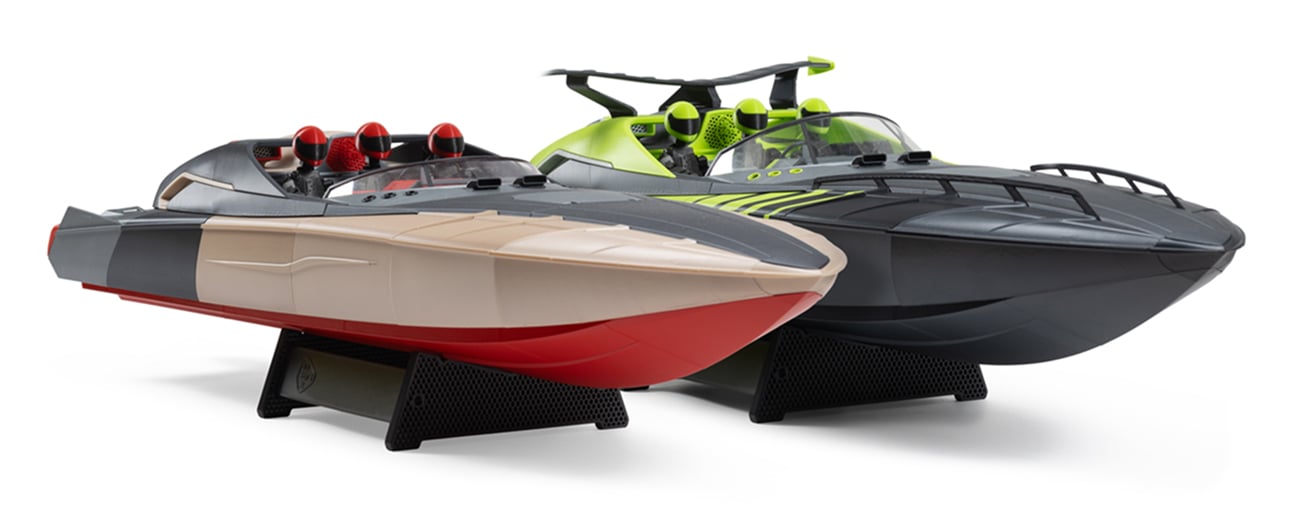
Designing Triton: The 1-Meter Predator You Can Print Even on a “Mini”
28. 5. 2026

The release of our largest and most powerful model yet, Triton, has sparked an incredible wave of excitement in the community. This 1-meter RC power boat in 1/8 scale is a true engineering masterpiece.
But how did we manage to design a massive hull that holds together with just six screws? What keeps the boat stable even during the wildest high-speed maneuvers, and why won’t you find any traditional metal bearings in its drivetrain?
We sat down with our fav duo, Jirka and Ondra, to uncover all the behind-the-scenes stories and technical details you won’t find in the manual. Lean back and enjoy the story of how the ruler of the seas came to life.
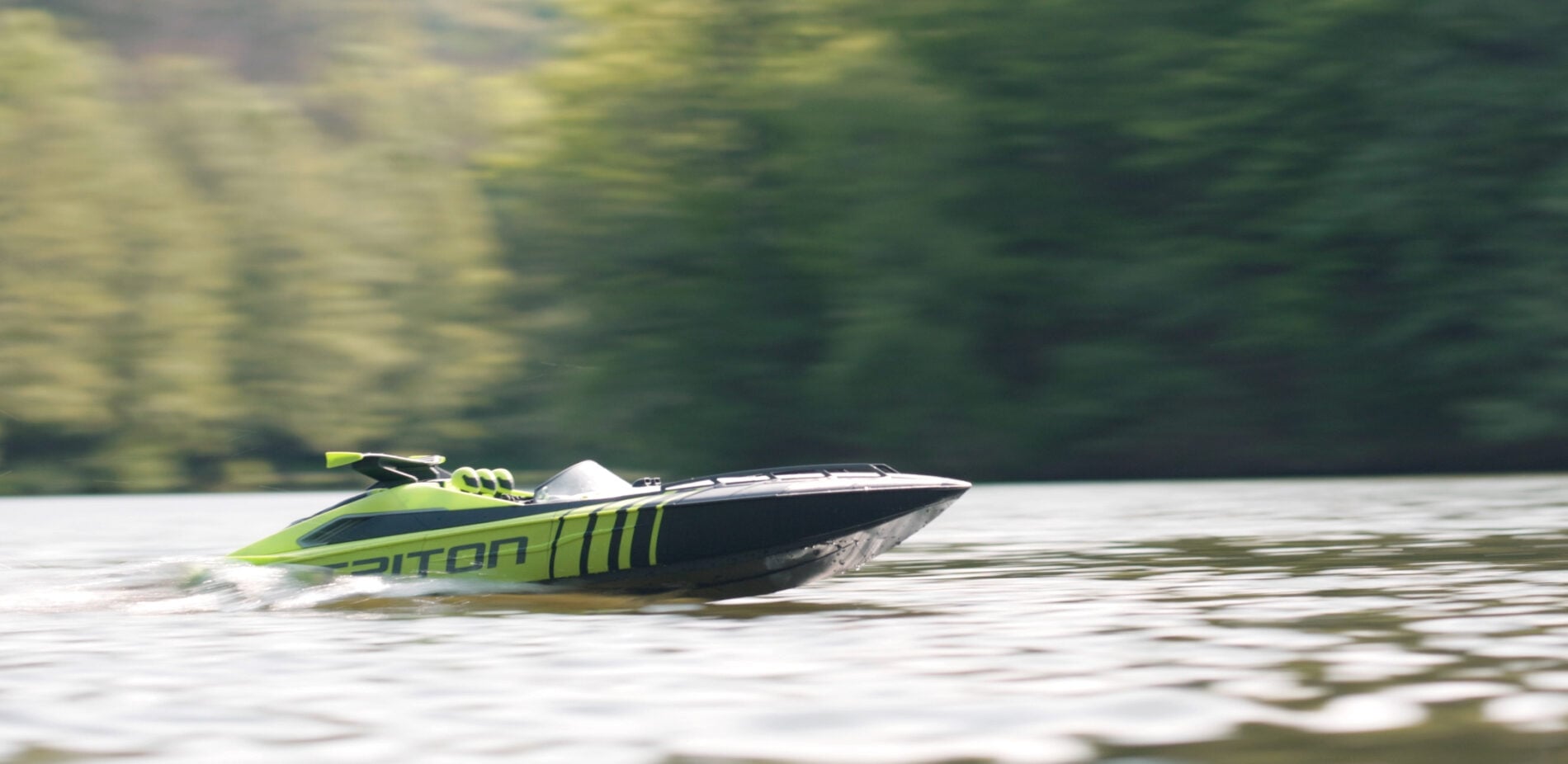
Skippy was the first boat from the 3D Sets stable and instantly became one of the most popular models in our portfolio. Triton now follows in her footsteps as her older, more muscular brother. How long have you been carrying the idea of developing such a large and powerful 1/8 scale power boat in your heads?
Jirka: Ever since we launched Skippy, we knew that somewhere down the road, we wanted to build a fast, sporty boat. About two years ago, we decided the time was right and started gradually developing the individual components.
Ondra: About two years. We had to “fight” with a massive hull that needed to be completely watertight while maintaining strict hydrodynamic shapes. I wanted to make sure there were absolutely no visual compromises on the model’s design.
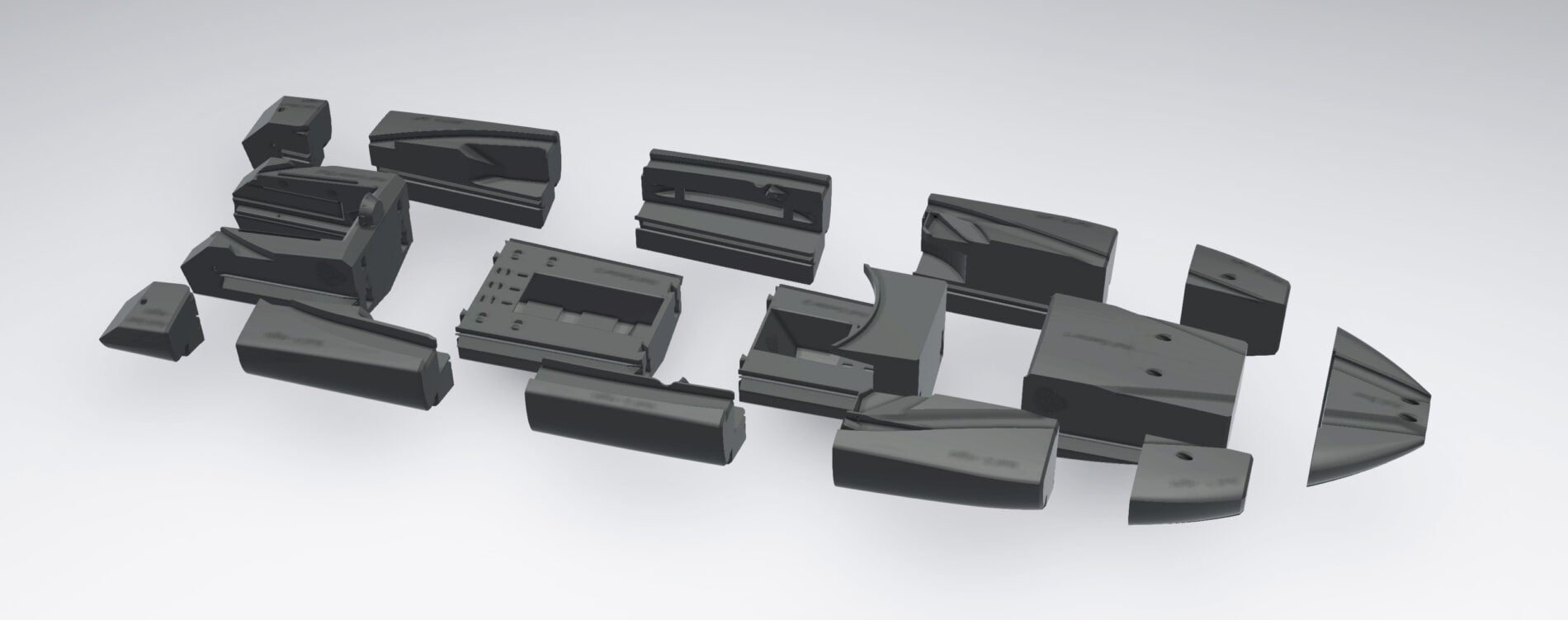
Triton is a massive, one-meter boat, yet you claim that even owners of the smallest common 3D printers with an 18×18 cm bed can print it without any issues. How did you manage to slice such a huge hull without requiring a kilogram of screws and a ton of glue to put it together?
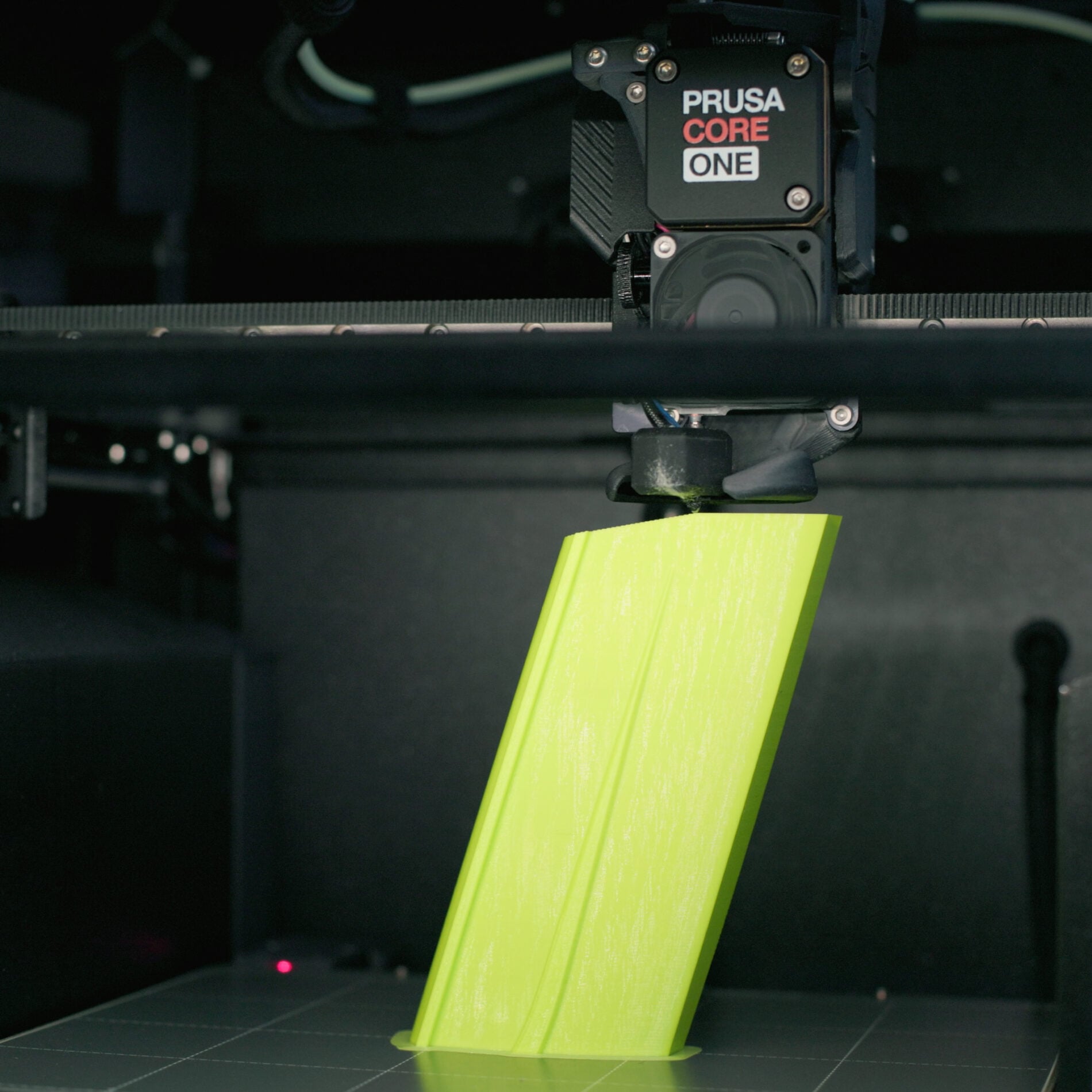
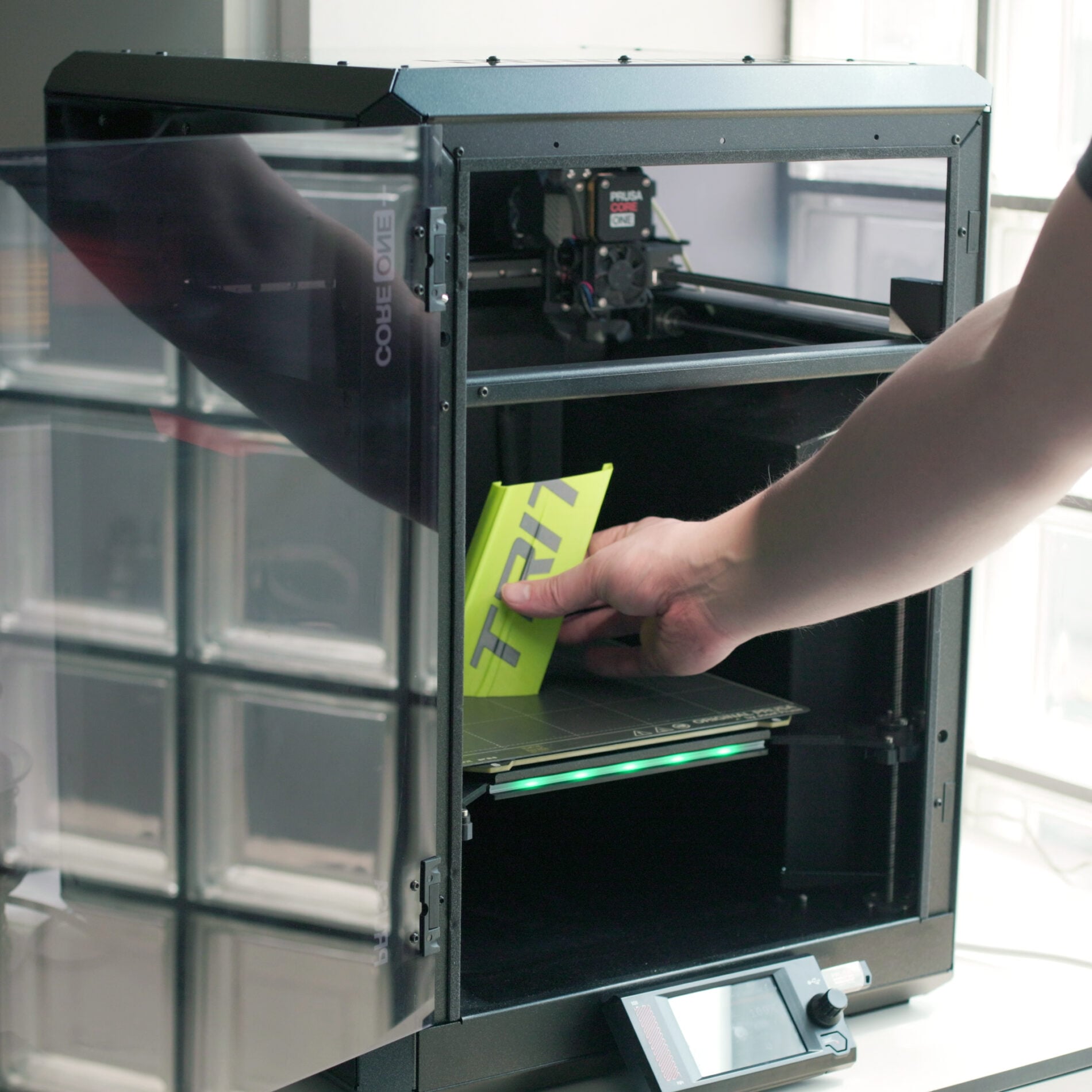
Ondra: We made the boat modular for many reasons, so it can be easily printed even on the smallest common “Mini” printers with a build volume of 18x18x18 cm. Many people are discouraged from large models due to complex slicer settings. That’s why we are now distributing pre-configured print plates (slicer profiles) for the most popular slicers, where specific print parameters are set directly on the individual parts.
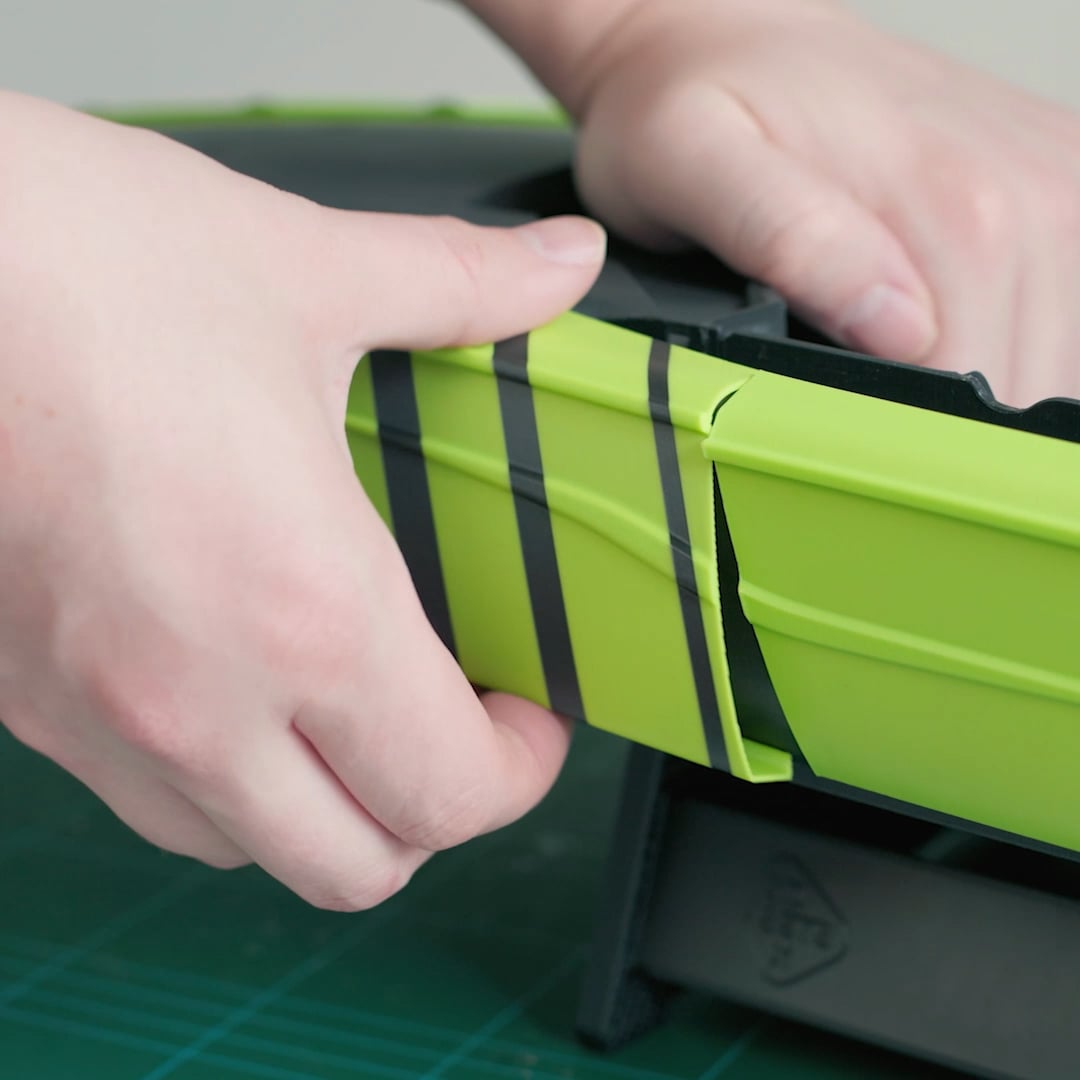
Jirka: Exactly. We could have simply chopped the hull in CAD into pieces and bolted them together using a mountain of hardware, but that kind of approach just doesn’t satisfy us as designers. Instead, we came up with a clever assembly method using an interlocking slide mechanism. Thanks to this, the hull basically holds together on its own, and the entire giant structure is ultimately secured by just 6 screws. As a bonus, you can print the nose of the hull out of flexible TPU material, which you’ll definitely appreciate if you don’t feel like a natural-born captain on the water yet.
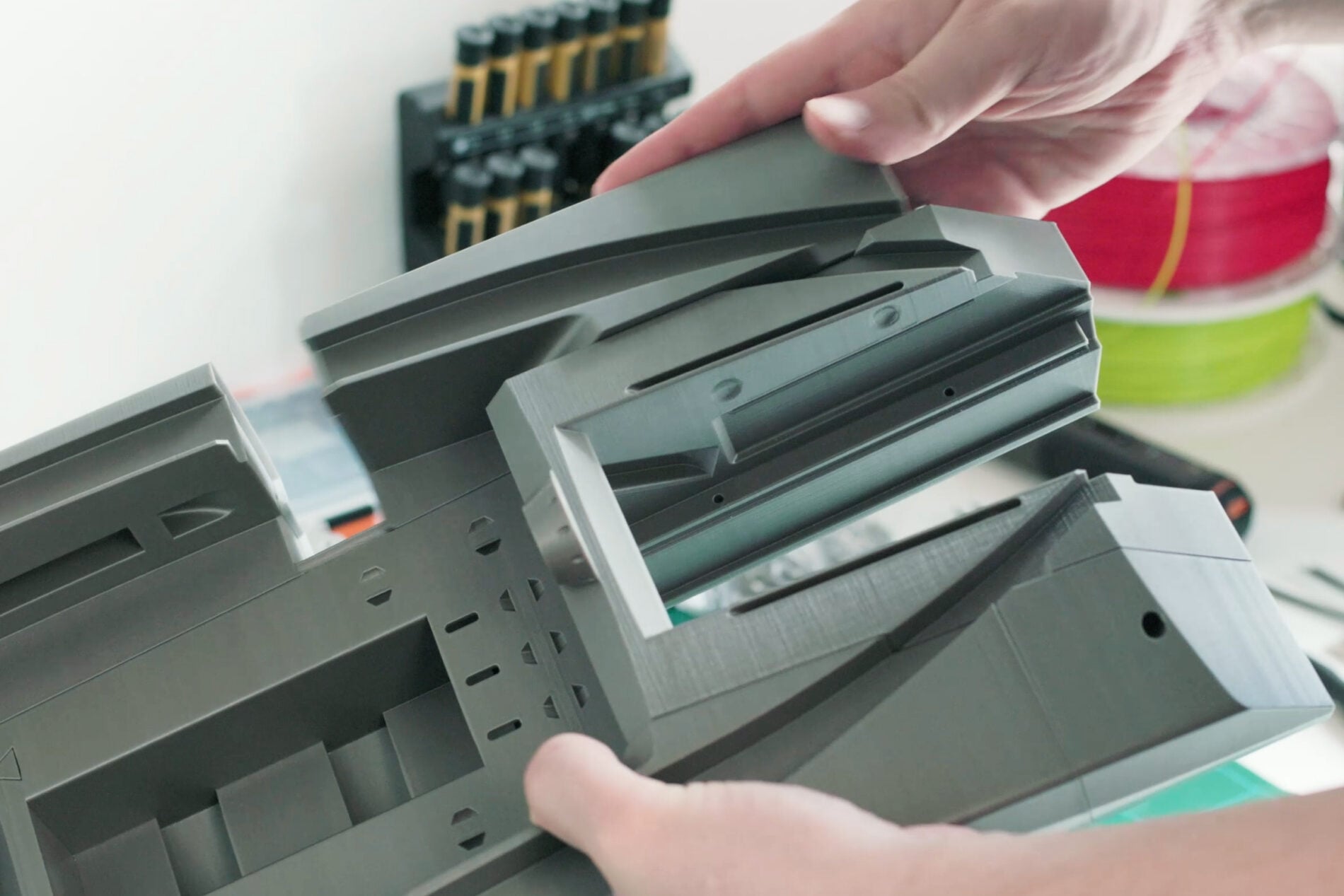
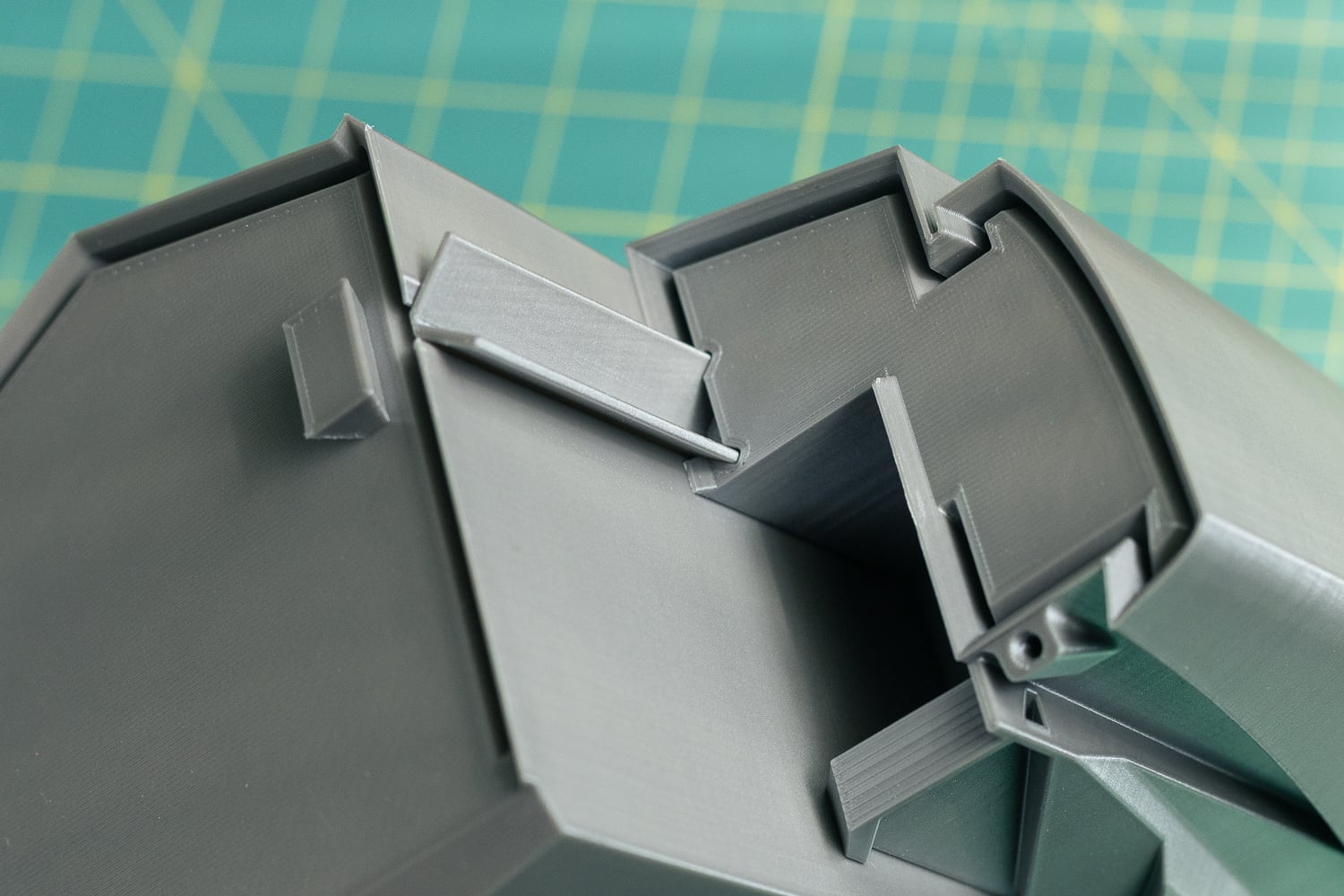
Anyone who has ever tried 3D printing large, hollow parts knows that plastics love to warp and deform. Often, just closing the top of a hollow part with solid top layers causes the surface to suddenly shrink, resulting in an ugly “step” artifact on the side. How did you deal with physics when designing Triton?
Ondra: This was a massive challenge. Based on our years of experience and extensive testing, we designed a complex yet fully functional geometric interface between the hull parts. Using special internal grooves, we can eliminate the material tension caused by cooling down. As a result, you have a beautifully smooth, lightweight, and cleanly printed hollow part off the print bed that aligns perfectly with the others.
Launching a one-meter model onto open water always brings a bit of nervousness. What if the boat hits a pier at high speed, crashes into a rock, or flips over in the waves? Is it even possible to sink Triton?
Jirka: We did our absolute best to make sure you can stay completely calm on the water. The shape of the hull is not accidental – it is strictly modeled after real, high-speed racing boats. It’s designed in a way that makes it virtually impossible to flip it over, even during the wildest evasive maneuvers at full speed.
Ondra: And in case of an actual accident? Triton features 15 independent watertight flotation chambers inside the hull. These ensure absolute unsinkability, even if several sections are completely ruptured at once. We won’t be as bold as the Titanic’s engineers, but Triton is practically indestructible. Feel free to let your kids drive it – just keep an eye on the runtime so you don’t have to swim for it due to a dead battery.
Boat propulsion is a very specific discipline, and you chose a Jet Pump with a motor that relies on highly intensive water cooling. Why this specific solution, and what about maintenance or potential tuning?
Jirka: We are definitely not experimenting with this cooling setup – we are counting on a reliable, time-tested principle that we fully trust. In fact, due to direct contact with the water, the motor is cooled so intensively that you can squeeze unexpectedly brutal performance even out of a small and very inexpensive motor. The only maintenance required is a quick spray of WD-40 lubricant inside the motor after you’re done running, and it will last a lifetime. And as we promised after releasing Mogster – this drivetrain is also completely free of traditional metal bearings!
Ondra: On top of that, the entire propulsion assembly is designed to be fully modular and easily slides out, making maintenance and motor access a matter of moments. This system directly invites modifications. DIY enthusiasts can try designing and printing their own version of the impeller or the entire propulsion system, simply slide it into our hull, and test what speeds they can reach. We are already looking forward to seeing your custom tuning in the community!
Let’s move on to the visuals and practicality – Triton features a unique system of removable “skin” (hull paneling). What are the main benefits of this solution, and how much easier does it make life for people with single-color printers?
Jirka: We are incredibly proud of our multi-material skin system because it elegantly solves several problems at once. First, it perfectly conceals the seams between the individual printed hull blocks, so it doesn’t matter if the print alignment isn’t accurate to a fraction of a millimeter. The diagonal orientation of these seams also emphasizes the aggressive dynamics of the design. We wanted owners of standard single-color printers to be able to achieve a wild, multi-material look without an MMU unit, simply by alternating the colors of individual skin parts or swapping filaments between layers. And a neat little detail – the hatch on the front deck can be easily popped out and swapped, for example, for a version with a racing number. Maybe we’ll have a 3D Sets MeetUp with a boat race one day!
Ondra: The skin also offers a huge practical advantage during accidental collisions with a pier – scratches don’t hurt as much because you can easily replace just the damaged piece of the paneling. As for practicality inside the boat: running full throttle on 4S means you’ll be changing batteries quite often. With standard RC boats, you usually face tedious screwing or sealing the hatch with tape. We went a different route – we designed a system where the entire deck canopy simply clicks into place and is secured by a scale steering wheel in the cockpit, which features a large 3D-printed thread. Changing the battery takes seconds. Even if spraying water manages to get under the canopy, a clever system of internal channels safely routes it out through the stern. Plus, on the Triton Racer version, a beautiful scale model of a jet turbine awaits you right under the deck.
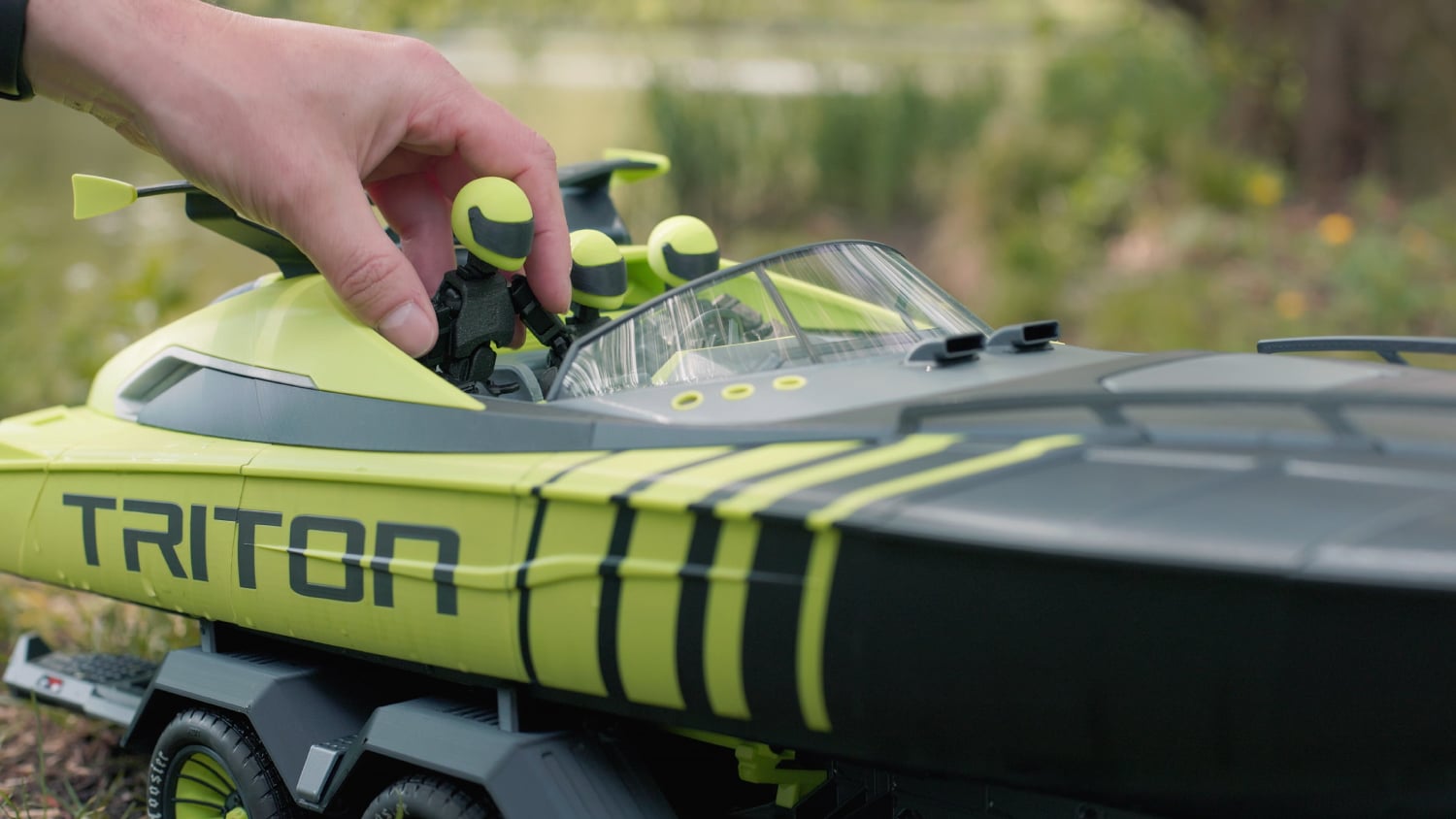
At first glance, there’s plenty of room in the cockpit. Is it true that you designed it specifically for the “Dummy 13” figure? Why did you choose this particular character?
Ondra: Dummy 13 became so incredibly popular in the 3D printing community that we simply couldn’t ignore it. And since Triton is an open-top runabout boat, these highly posable figures fit into the cockpit perfectly.
Jirka: At first, we thought about using our traditional Bruce and Ann as the crew, but in the end, Dummy 13 (scaled up to 125%) won. It’s an immensely popular character among adults and kids alike. Furthermore, there is a massive library of community accessories available for Dummy 13, so makers can style and dress their pilots exactly to their liking.
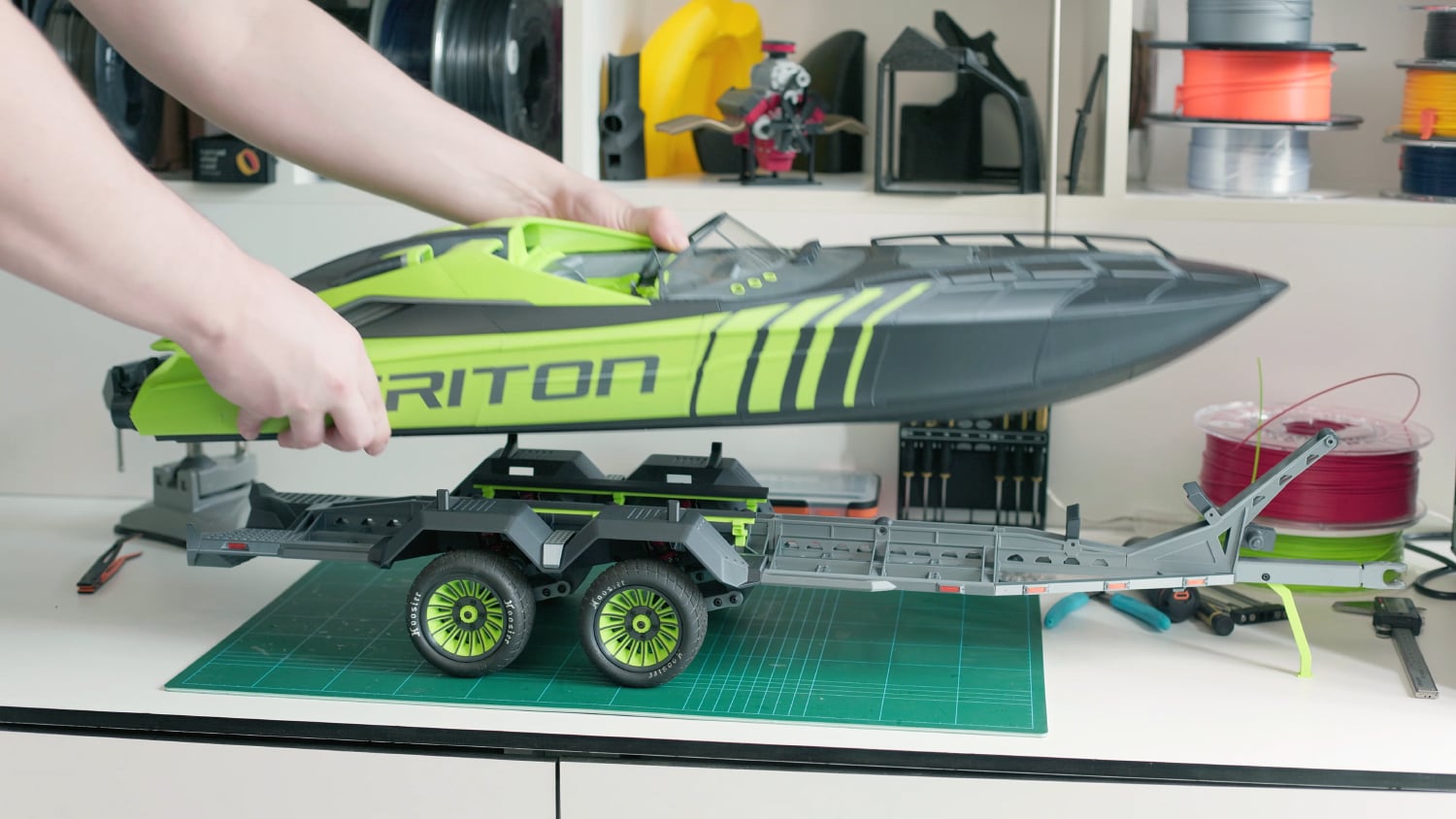
The Triton Racer is not “just” a boat. The package also includes a robust dual-axle trailer. Which models from the 3D Sets family is this trailer compatible with, and what can fans hitch it to on their next expedition?
Jirka: You can hitch it behind all of our 4×4 expedition models, Mogster (models 20-22), and Max Team (model 14). Personally, I prefer the Rancher – the combination of a this truck with this large trailer and the boat looks absolutely fantastic.
Ondra: I highly recommend our Model 14 (Max Team) with the Styling Accessory pack – this sporty van printed in matching colors with Triton creates the ultimate towing rig.
With such an ambitious project like a one-meter boat featuring a water jet propulsion system, things probably didn’t always go smoothly. What did you struggle with the most during development?
Ondra: We spent a significant amount of time fine-tuning the propulsion itself, specifically the hydrodynamics of the jet pump, to ensure it would be fast enough even with a basic, affordable motor. We printed and tested dozens of different impeller designs before finding the right, highly efficient combination.
Jirka: After our experience with Skippy, we weren’t worried about waterproofing at all – our foundations there are rock solid. Most of our time was really spent on testing the water flow through the pump and optimizing the impeller shape to give the boat instant punch.
Is it harder to design an off-road truck that has to survive rough jumps in tough terrain, or a boat that fights hydrodynamics and waterproofing? Does the development process differ fundamentally for these two different elements?
Jirka: They are completely different categories; you can’t really compare them. With a boat, you have to be extremely mindful of the overall dimensions and the exact weight of the model to ensure the correct draft so the boat sits properly on the water line. Luckily, you don’t have to deal with that to such a strict degree with cars. Plus, reliability and absolute simplicity are paramount for boat propulsion. You don’t want your model to get stuck in the middle of a pond, leaving you waiting on the shore for the wind to blow it back to the pier – unless you feel like going for an unexpected swim.
Ondra: A boat is simply a different world. With a car, if it fails, you just walk up to it and pick it up. A broken boat in the middle of a lake, however, can turn into a rather complicated (and wet) experience. That is why we place such a massive emphasis on the reliability and functionality of every mechanical detail.
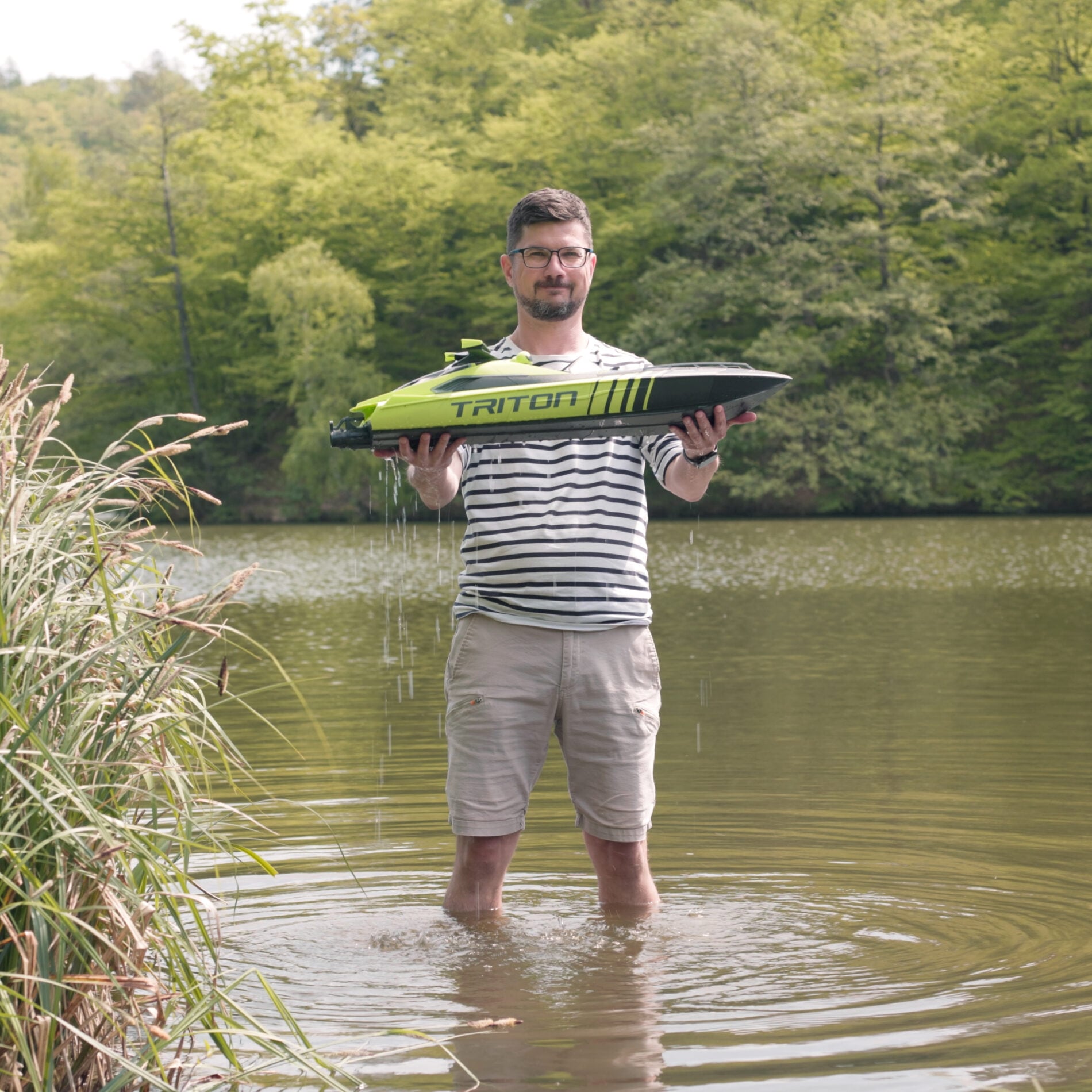
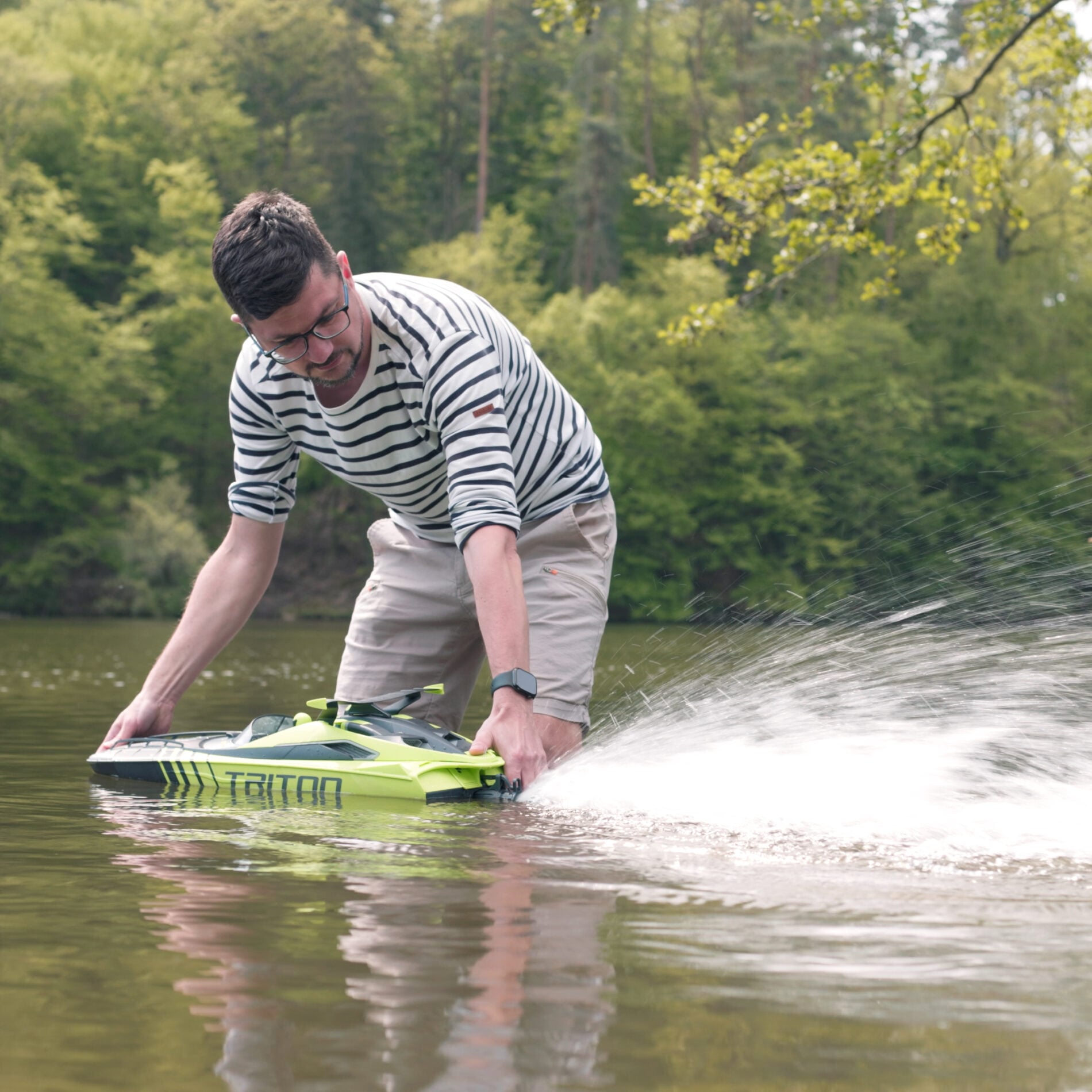
If you had to describe Triton in just three words, what would they be? And what is that personal moment for you when you say to yourself, “Yes, we truly nailed this”?
Ondra: My three words are: beautiful, tuned predator. And the best moment? Definitely the second we put the final version on the water and realized how incredibly well this large model handles, and that it genuinely CANNOT be flipped over during wild maneuvers. 🙂
Jirka: I won’t specify it in three words because the name Triton (the ruler of the seas) says it all. We are incredibly proud of how easy it is to assemble, yet how brutally functional of a model we managed to engineer. So for me, a single word is enough: Triton.
A huge thank you to Jirka and Ondra for giving us an exclusive look under Triton’s hood!
What about you? Are you already printing your own Triton? Share your progress and tag us on our socials!
Thank you for reading, and we look forward to seeing you in the next story!